Mostar is about 140 km north of Dubrovnik, across the border in Bosnia and Herzegovina. The road trip takes roughly 2.5 hours without stops. But a full-day trip runs 10–12 hours, including the border crossing, Kravice Waterfalls, a walking tour, and the journey back to Dubrovnik.
Table of contents
Mostar Day Trip From Dubrovnik
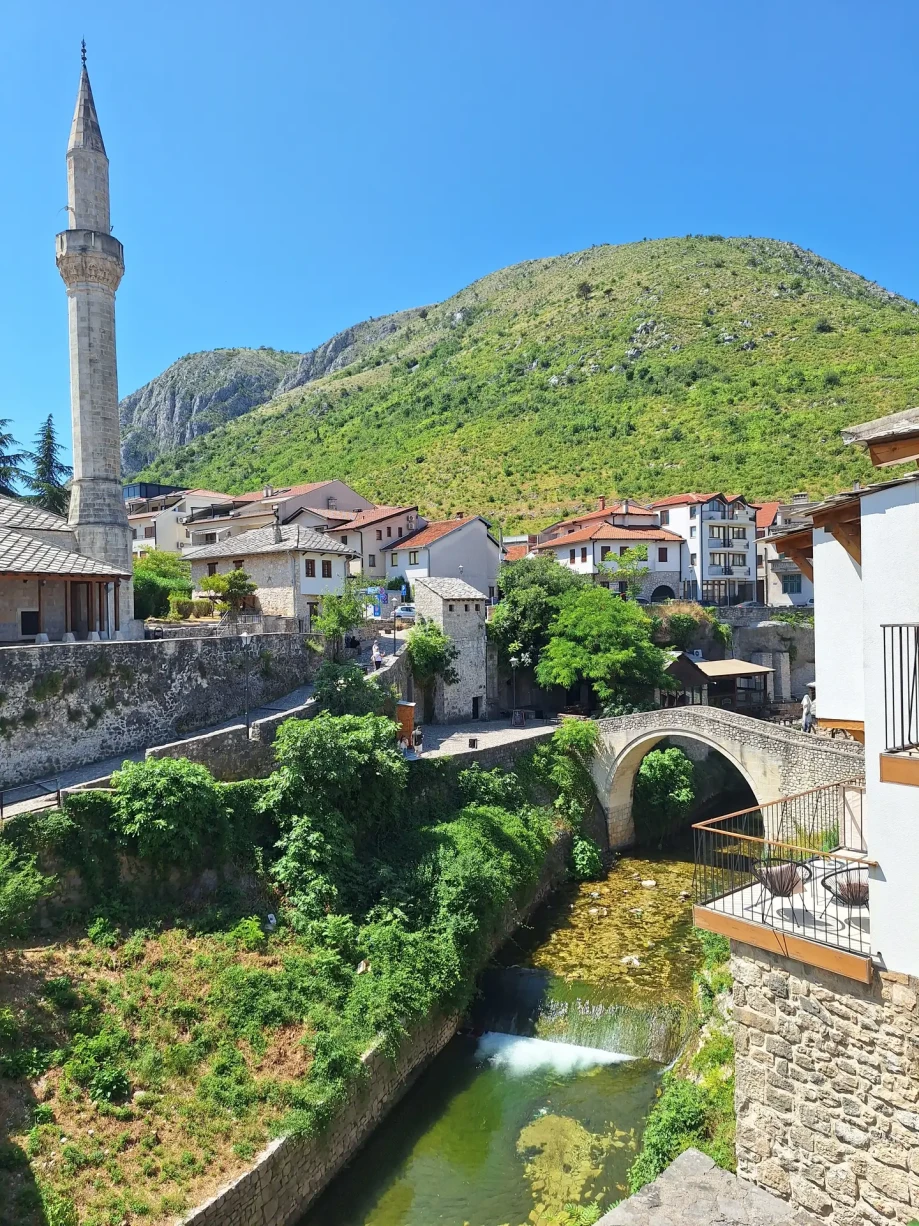
Tour of Mostar is one of the most popular excursions we offer. Not because it's the closest day trip from Dubrovnik, it isn't. But a visit to Mostar offers a genuine change of scenery, culture, and history in a single day. You leave the Adriatic behind, and arrive in a town where Ottoman minarets stand next to Austro-Hungarian facades and bullet-scarred apartment blocks. That contrast makes the trip worthwhile.
If you're planning your itinerary, this post is a companion to our main guide on the best day trips from Dubrovnik. Here, I'll go deeper into the Mostar route specifically. What you'll see, what it costs, and what to expect at each stop.
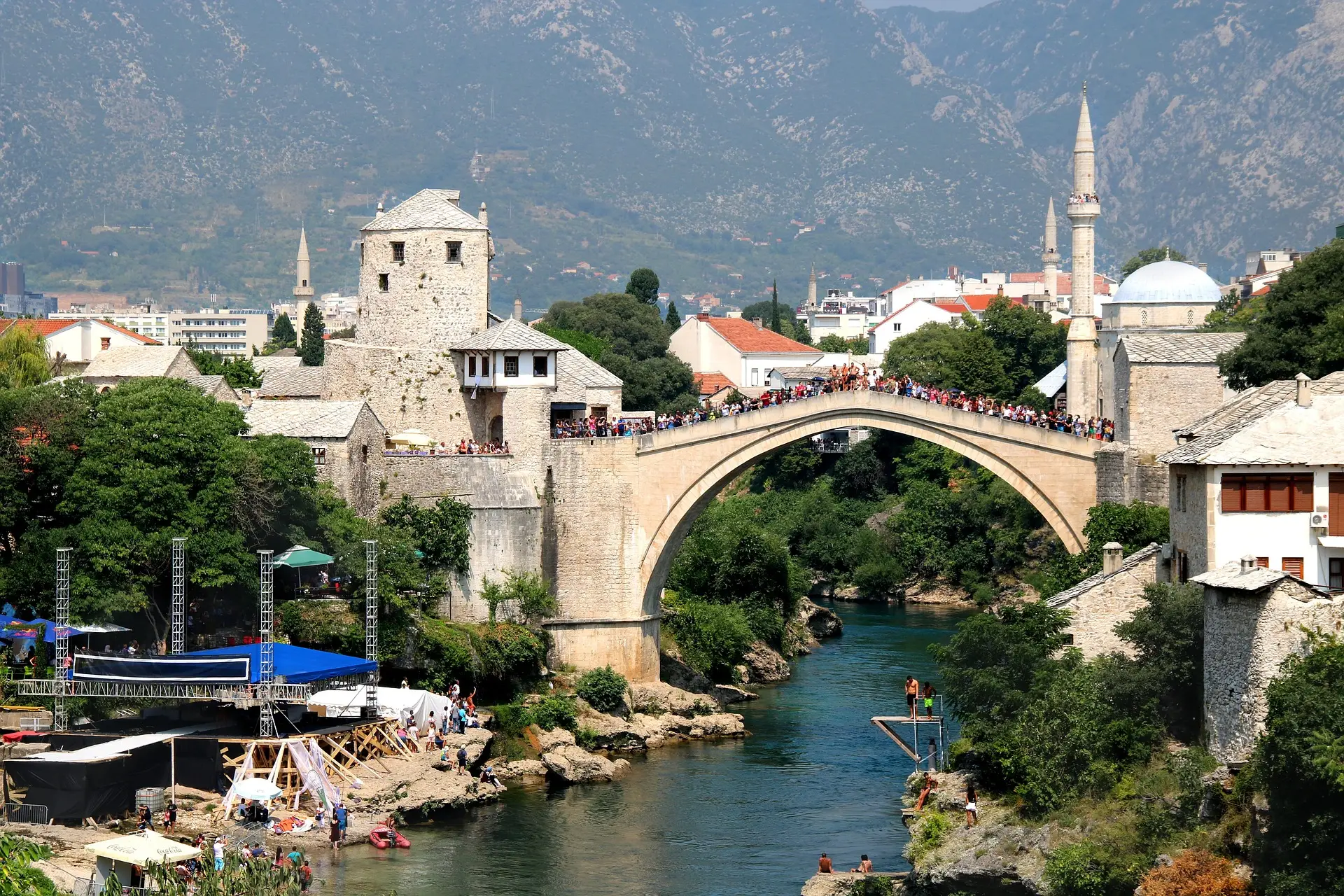 Mostar Old Bridge (Stari Most)
The Route: Dubrovnik → Neum → Kravice → Mostar
Most organised guided walking tours follow a similar path. You leave Dubrovnik early, drive north along the Adriatic coast, and enter Bosnia and Herzegovina at Neum. It is the country's only coastal town, a narrow 20 km strip of shoreline wedged between Croatian territory.
Since the Pelješac Bridge opened in 2022, Croatian traffic heading north no longer has to pass through Neum. But for a day trip to Mostar, you still cross the BiH border. Prepare your passports. EU/EEA citizens also need a valid passport.
Border waits vary. In the off-season (October–April), you might clear the checkpoint in 5–10 minutes. In peak summer, delays of 30–60 minutes are common. Organised tours handle the paperwork efficiently because guides know the process.
After Neum, the road turns inland through the Neretva river valley. Most tours stop first at Kravice Waterfalls before continuing to Mostar.
Stop 1: Kravice Waterfalls
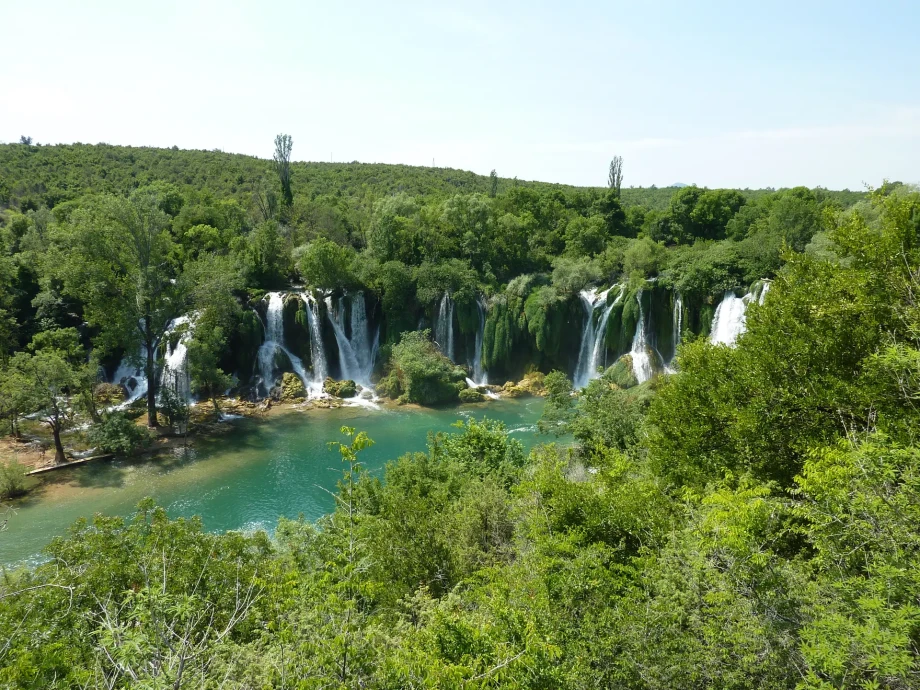
Kravice is a horseshoe-shaped waterfall system on the Trebižat River, about 40 km south of Mostar. Kravice Falls are roughly 25 metres high. They are divided into around 20 individual cascades that pour into a natural pool below.
Locals sometimes call it a "mini Niagara," which exaggerates the scale but captures the shape. In spring, when snowmelt feeds the Trebižat, the falls pound with force and throw up mist you can feel from the viewing platforms. By July and August, the water volume drops, but the pools become calm enough for swimming.
If you're on an organised tour, your guide will handle the logistics. You'll have about an hour here. Enough to walk to the falls, take photos, and wade in if it's summer. Pack a swimsuit and a towel just in case.
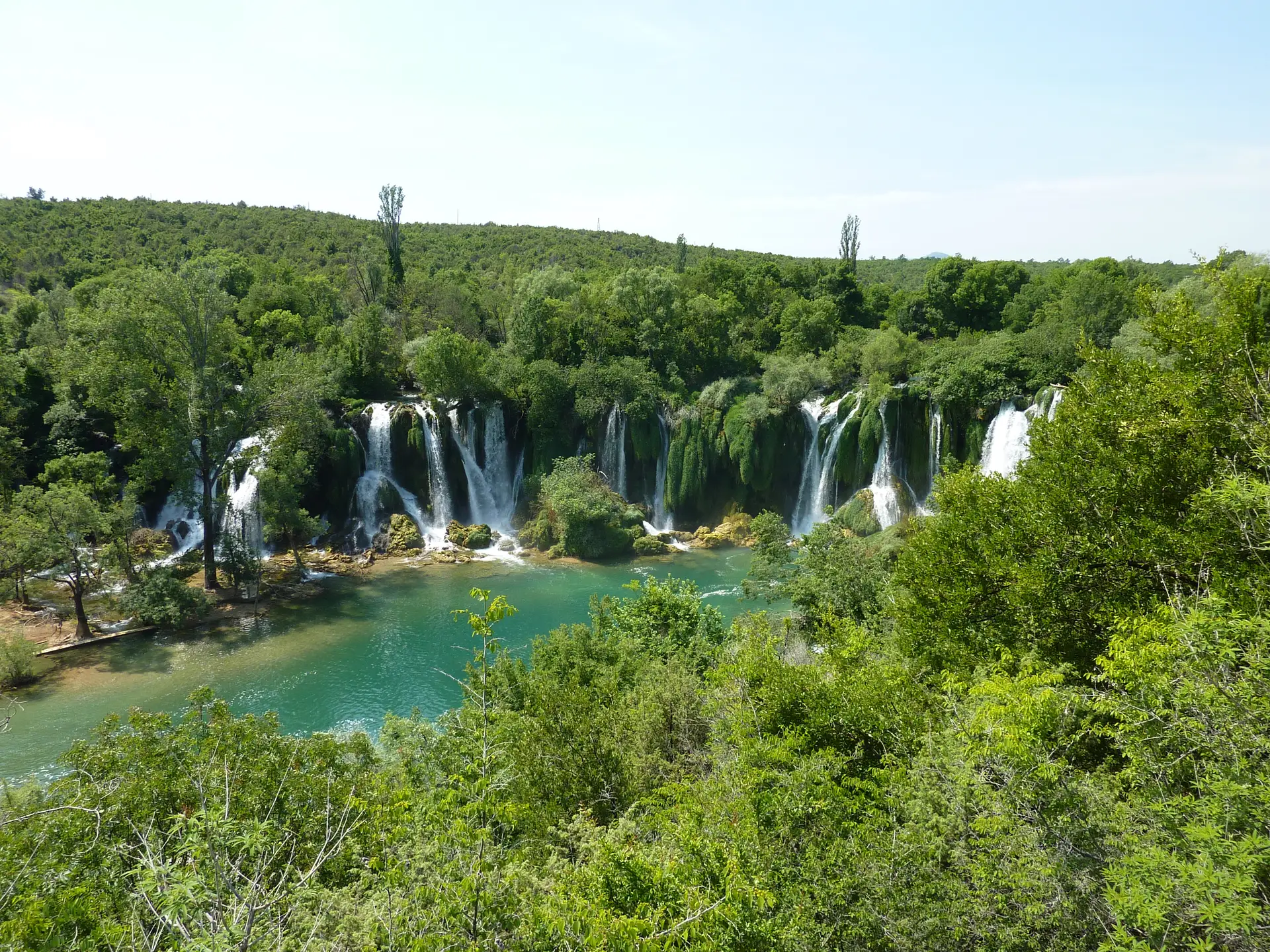 Kravice Waterfalls
Stop 2: Mostar Old Town and Stari Most
The town of Mostar is the main attraction. When your group arrives in Mostar, a local guide will lead a walking tour of the Old Town. After that, you have free time to explore on your own.
Stari Most Bridge (The Old Bridge)
The bridge is the reason most people visit. The original was built in 1566 under the order of Sultan Suleiman the Magnificent. It stood for 427 years. In November 1993, during the Bosnian War, it was destroyed by tank fire. The reconstruction, using original stone pulled from the river and traditional Ottoman building techniques, was completed in 2004. The Old Bridge and the surrounding area are a UNESCO World Heritage Site.
Walking across the bridge is free. The stones underfoot are polished smooth from centuries of foot traffic and can be slippery, especially when wet. Wear shoes with grip.
You might see a local diver from the Mostari diving club leap from the bridge into the green Neretva River. They've done this since at least the 17th century. Today, the divers collect donations from onlookers before jumping. It's become a paid tradition, but no less impressive.
Fun Fact: Every year, Red Bull Cliff Diving is held at the Old Bridge in Mostar. This year marks the 10th anniversary.
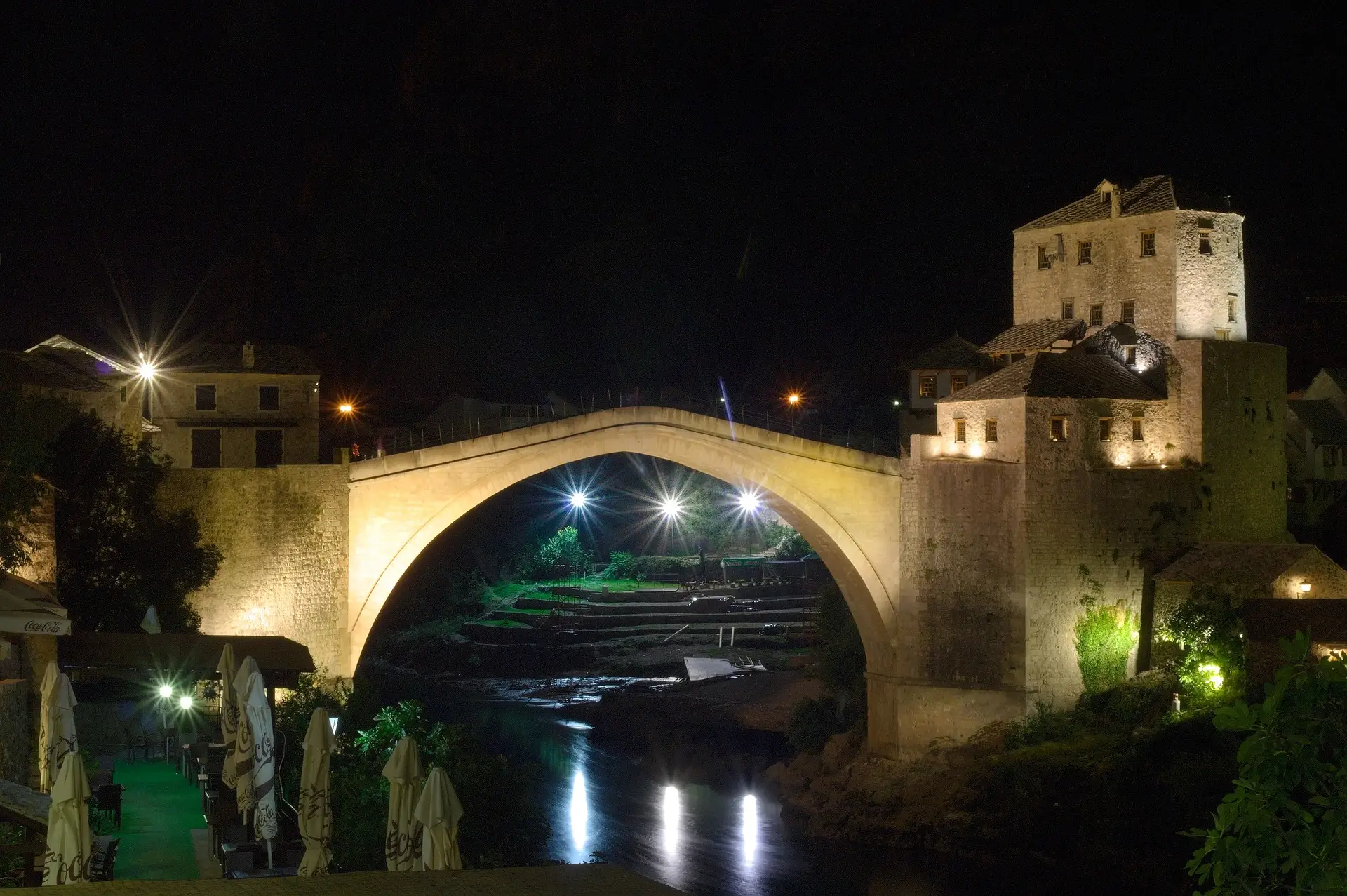 Old Bridge by night
What else to see on a day tour to Mostar?
Beyond the bridge, the Old Town has enough to fill your free time. Typically 2–3 hours including lunch:
- Kujundžiluk (Old Bazaar): the copper-working street is now lined with souvenir shops selling copperware, Turkish lamps, and Bosnian coffee sets. Prices are lower than in Dubrovnik.
- Koski Mehmed Pasha Mosque: built in 1618, this mosque is open to visitors. A small entrance fee applies. The minaret offers one of the best photo angles of the bridge, but the climb is steep and narrow.
- Turkish House (Bišćević House): A restored 17th-century Ottoman house that shows how wealthy Mostar families lived. Most organised tours include the entrance fee.
- War Photo Exhibition: located in a former sniper tower near the front lines, this exhibit documents the 1992–1995 siege of Mostar. It's confronting, but an important context for the bullet holes you'll notice on many buildings.
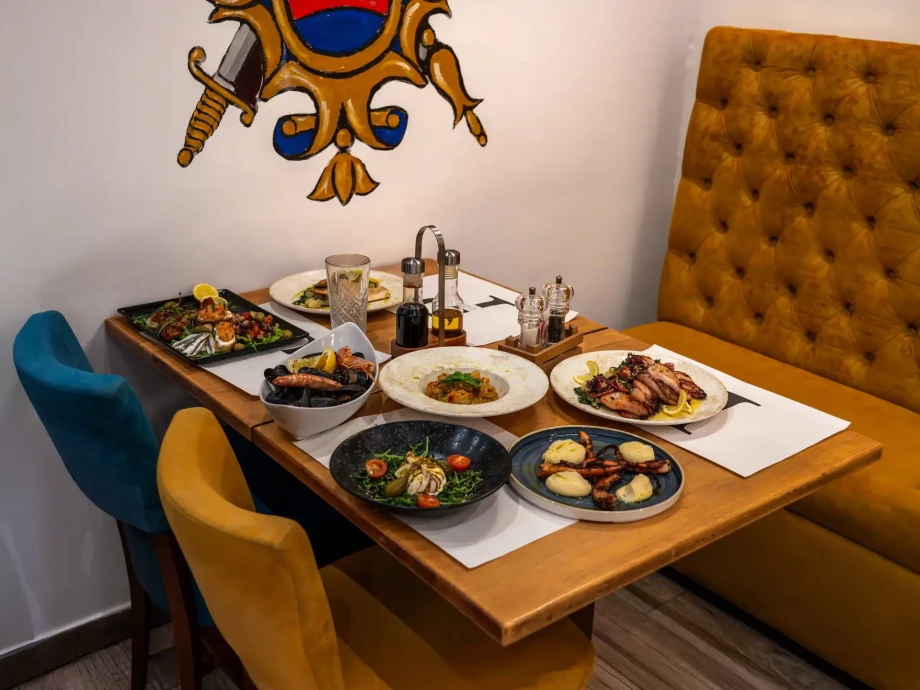
- Lunch: Eat here. Bosnia is much cheaper than Croatia. A full plate of ćevapi (grilled minced meat) with somun bread, onions, and kajmak costs 5–8 EUR. Pair it with Bosnian coffee prepared in a džezva for one of the region's defining meals. Enjoy a traditional food.
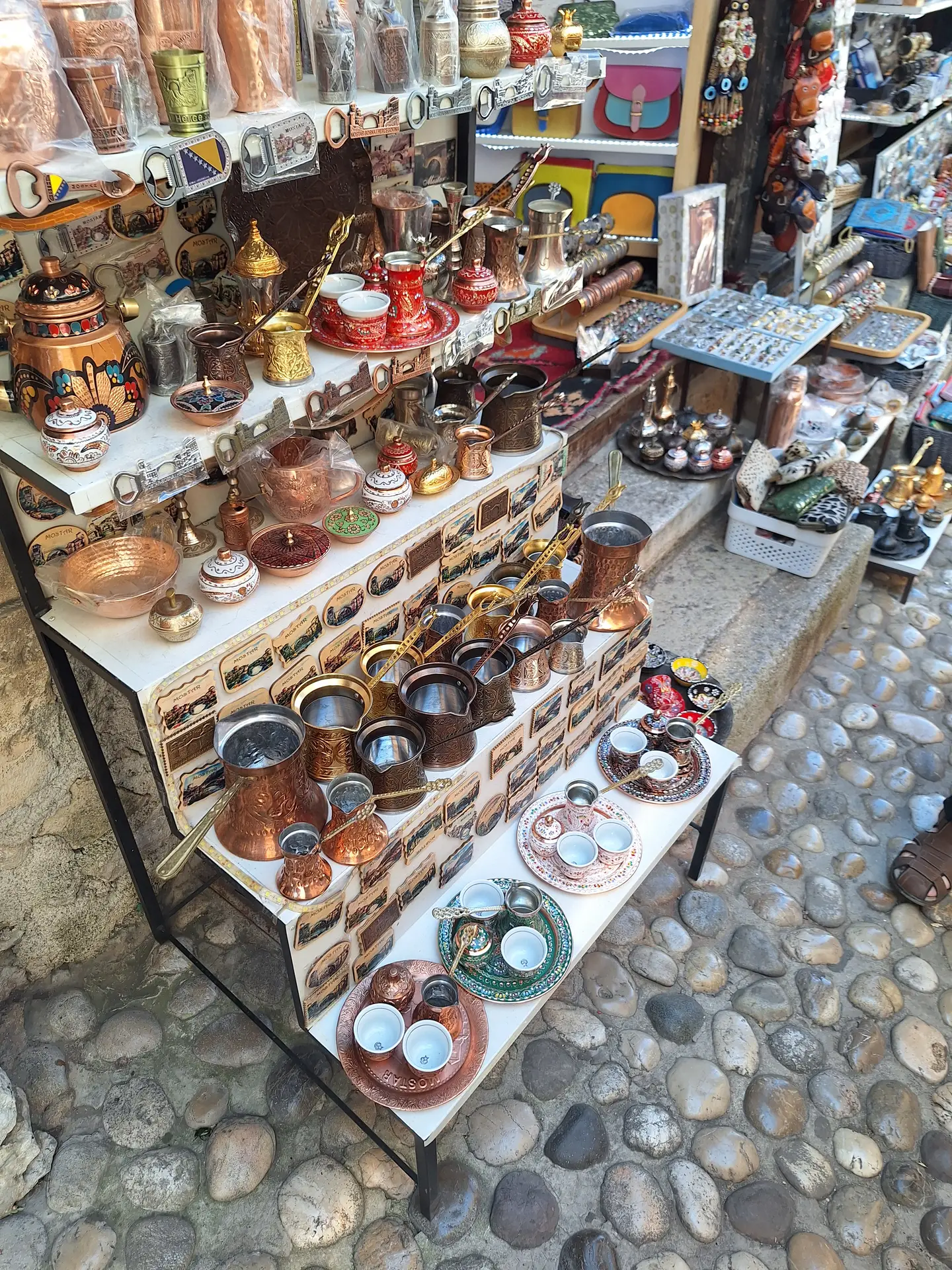 Kujundžiluk (Old Bazaar)
What to Bring: A Packing Checklist
This is a long day (11–12 hours door to door), and you'll cross an international border. Don't forget:
- Passport or national ID card - non-negotiable for the border crossing
- Cash in euros - accepted widely in both Neum and Mostar. The Bosnian convertible mark (KM) is the local currency, but euros are accepted almost everywhere at tourist spots.
- Swimsuit and towel - if visiting Kravice in summer
- Water shoes or sandals - for Kravice and for the slippery bridge stones
- Sunscreen and a hat - Mostar sits in a valley and gets hotter than the coast. Summer temperatures regularly exceed 35°C
- A water bottle - refill opportunities are limited between stops
- Camera - obvious, but the Neretva light in midday is striking
A Note on the History
Visitors sometimes arrive expecting a purely picturesque day out. Mostar is beautiful, but it was also under siege for 18 months during the 1990s. The Old Bridge's destruction wasn't an accident; it was deliberate. Many buildings in Mostar still bear shrapnel and bullet scars, and the city's ethnic divisions remain visible in daily life. Your guide will explain the context, and I'd encourage you to listen. It adds a layer to the trip that postcards don't capture.
Several of our past guests have mentioned that the historical context made the trip more meaningful. As one visitor put it after her tour: "Maria shared lots of information on the way and inspired me to do a little more digging into the recent history of the area. Truly, it's one of my favorite tours I have done."
Frequently Asked Questions
Do I need a visa to visit Bosnia and Herzegovina from Dubrovnik?
EU/EEA citizens, UK, US, Canadian, and Australian passport holders do not need a visa for stays of up to 90 days. You will need a valid passport.
How long does the border crossing take?
In the off-season, consider 5–15 minutes. During peak summer, it can take 30–60 minutes or more. Organised tours tend to move faster than individual cars.
Can I swim at Kravice Waterfalls?
Yes, from roughly June through September. Keep in mind that the water is cold even in summer. Refreshing on a 35°C day, but surprising if you're not expecting it. There are no lifeguards.
Is the Dubrovnik to Mostar day trip suitable for children?
Yes, though it's a long day (11–12 hours). The bus ride and border wait can test younger kids' patience. Kravice is a hit with families, and most children find the Mostar bridge divers exciting.
What currency should I bring?
Euros are widely accepted at tourist sites in both Neum and Mostar. The official currency of Bosnia and Herzegovina is the convertible mark (KM/BAM). ATMs in Mostar dispense KM. For a day trip, bringing 30–50 EUR in cash is usually enough to cover lunch, entrance fees, and souvenirs.
Is the trip worth it if I only have one day?
The short answer is yes. Especially if you're interested in history, culture, and scenery beyond the Adriatic coast. The trip gives you two countries - Croatia and Bosnia, a UNESCO site, a waterfall, and a meal you'll remember. All of that in a single day.